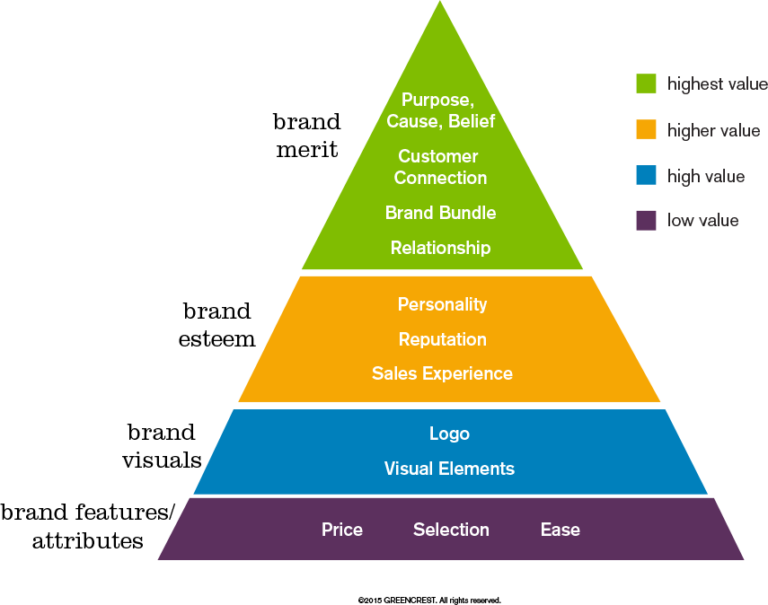
Brand Value Pyramid Visualize where your brand stands GREENCREST
A sub brand is a part of the parent company or brand in the branded house model. It shares the parent brand's identity and leverages its reputation. A branded house, on the other hand, is a strategic approach where all sub brands operate under the umbrella of one parent brand. 5. What is an example of a branded house and a house of brands.
Creating Your Brand Architecture Structure Your Brand
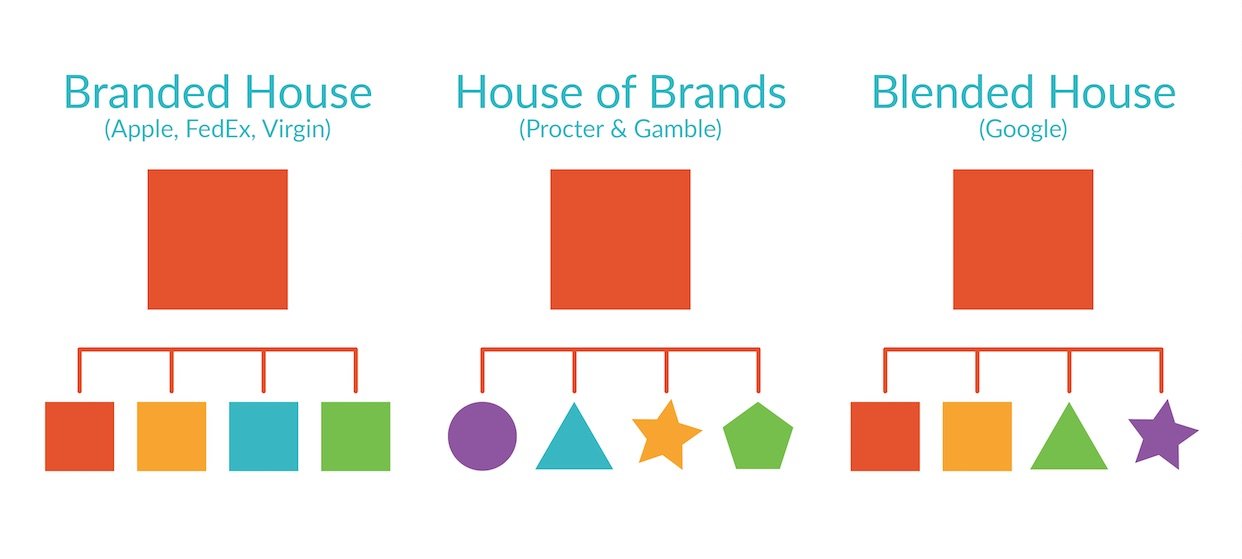
On the spectrum of options, brand strategists generally put the "branded house" model at one end and the "house of brands" model at the other. In the middle exists various hybrid arrangements to fit the unique needs of a given situation. But, to keep things simple, we'll treat this as a choice between one extreme or the other.
Branding Strategy Source Branded House vs. House of Brands

A Branded House is a strategy where more than one company's products are sold under one name/branding umbrella. This approach is optimal if the master brand/company wants more control over the end product's production, distribution, and cost. With a Branded House, it's often beneficial to house all the brands within the same customer.
What Is Brand Architecture [+ Examples] Brand Master Academy
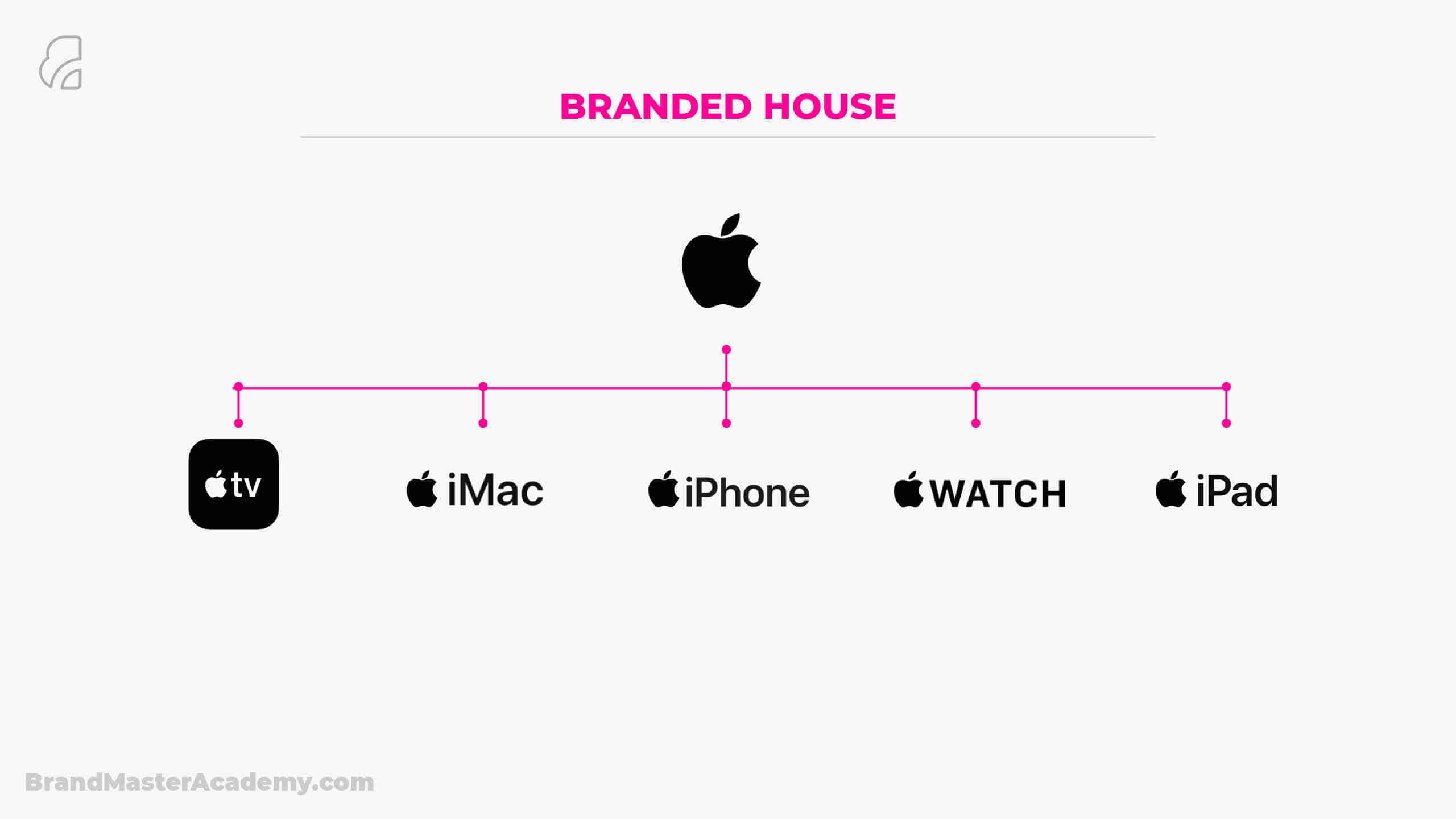
Types of brand strategy. 1. Branded house. In this model, the firm is the brand. Services and market sectors (or practice areas) are subsets of that primary brand and are not formally branded. Apple and Google are globally known for this model. Under Apple's primary brand comes many subset brands: Mac, Apple Music, and iPhone.
One brand or a variety of brands for your company? Downing
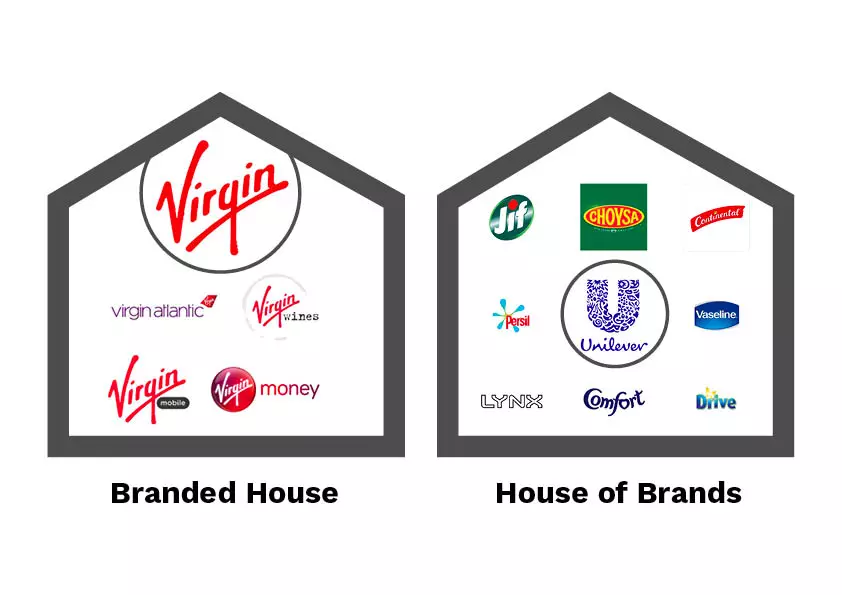
A branded house model leverages the parent brand and attaches it to each child brand below, while a house of brands model allows for unique child brands separate from the parent brand. Branded house pros and cons. A branded house approach is wise if you want your parent brand to be a well-known entity or if it already is. If your parent brand.
Marketing Concept Brand Architecture The Brand Hopper vrogue.co
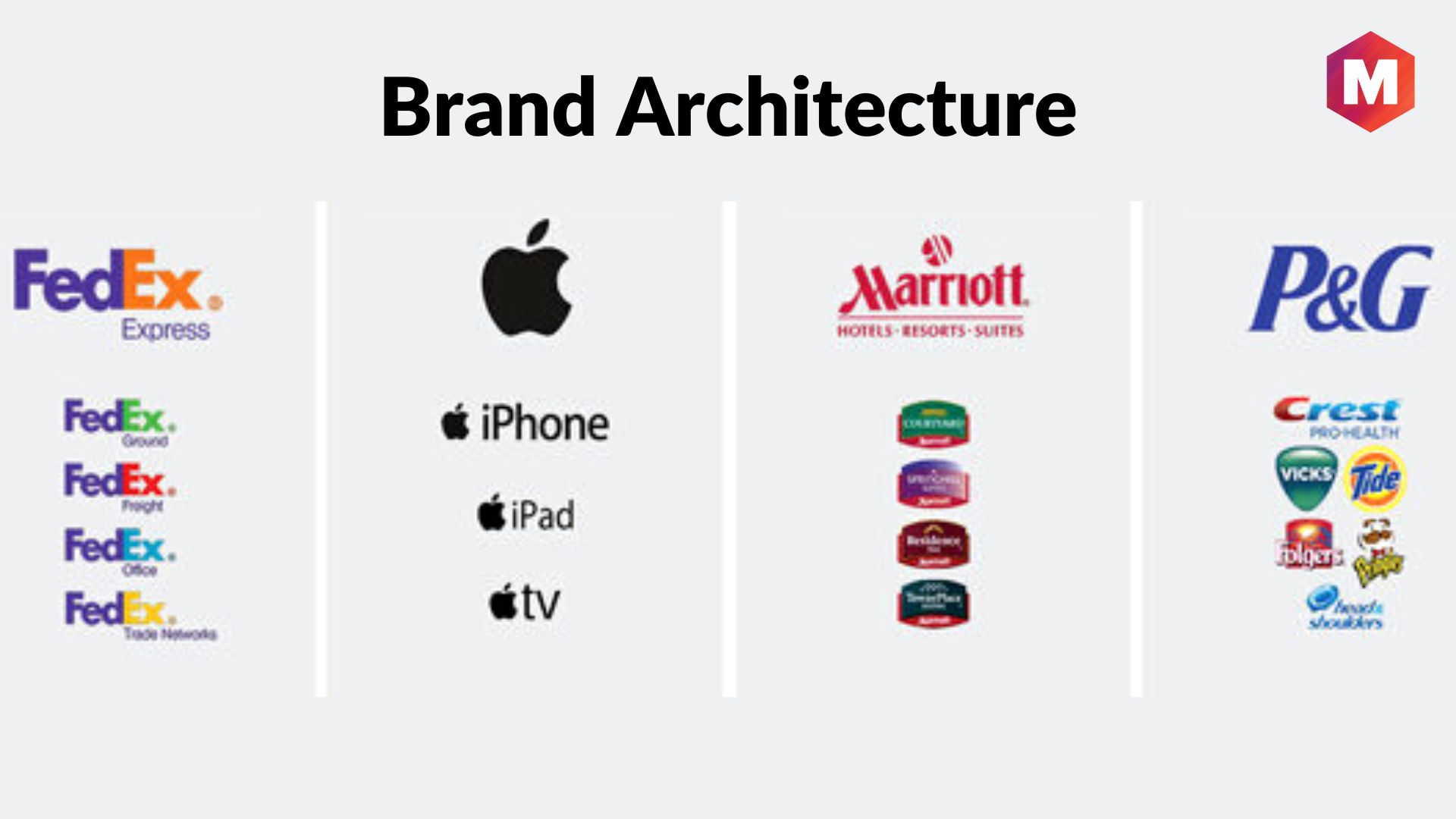
There's legal liability type risk, there's brand reputation risk, there's cost risk, there's time-to-market risk. In a master brand, or branded house solution, it's much faster to bring a product to market. There's less risk. The equity's already there. And in a house of brands, there's a lot more risk bringing an unknown product to market.
Brand House Free Template and Guide Conceptboard
In marketing and brand management, the decision between a Branded House strategy and a House of Brands strategy holds substantial significance. Let's delve into the intricacies of each approach and how businesses can make an informed choice for branded house vs house of brands based on their goals, offerings, and market dynamics.Branded House Strategy: A Unified FrontKey Characteristics:1.
Your brand architecture is an organizing structure that defines how all of your brands and

House of brands vs. branded house. A branded house strategy provides consistent messaging for all of a company's products or services, while the house of brands method focuses on developing a unique brand for each offering. Understanding some of the key differences between these two strategies can help you determine how to market a company's.
House of Brands 101 Brand Architecture Strategy (+Top Examples)
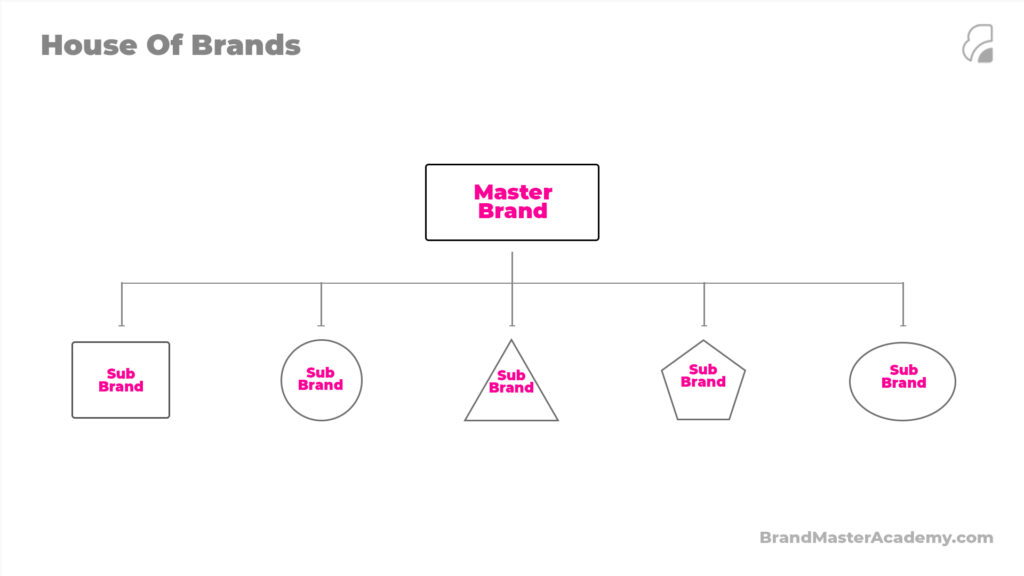
A branded house is a marketing model that defines the company as the brand. This means that the different services and products provided by the company fall under a primary brand. For example, a company may have different offerings, such as broadband and TV services, flights and banking services that fall under one main brand.
Brand Architecture A Blueprint for a Better Brand

Branded House Versus House Of Brands. Brad VanAuken The Blake Project 3 min. Branding Strategy Insider helps marketing oriented leaders and professionals like you build strong brands. BSI readers know, we regularly answer questions from marketers everywhere. Today we hear from Teresa, a VP of Marketing in Seattle, Washington who brings us this.
Brand Architecture Foundations Branded House vs House of Brands

Branded house. A company with a branded house architecture has many products and offerings under one masterbrand (also called mother or umbrella brand). Its products don't have separate identities and all contribute to the strength of the masterbrand. Examples of companies using this framework include HSBC and Virgin. Amazon is also.
Difference Between House of Brands and Branded House Clarity Quest
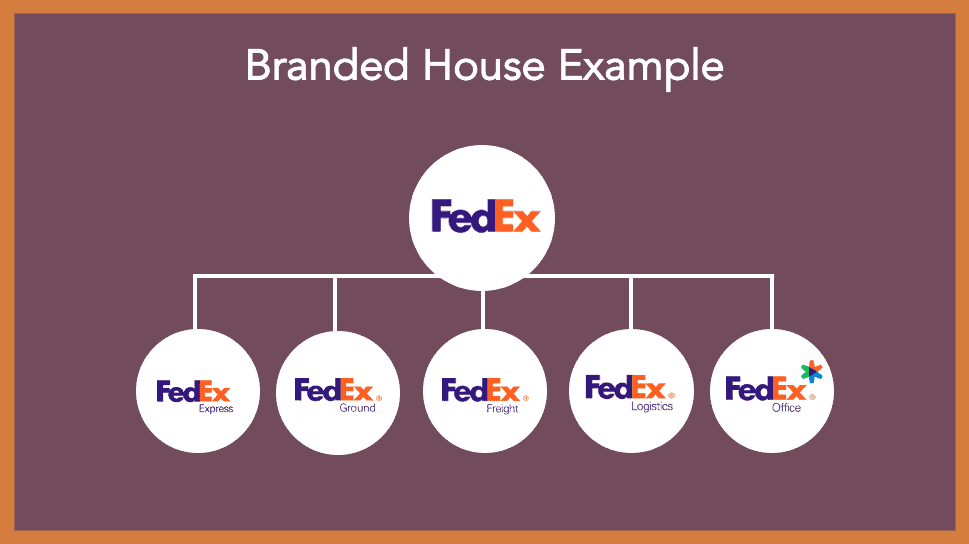
Unilever is a prime example of a successful House of Brands. This multinational company owns over 400 brands, each with its own identity and target market. Some of the well-known brands under Unilever's umbrella include. Dove: A personal care brand known for its moisturizing products and body-positive messaging.
Brand Strategy Branded House vs. House of Brands DKY
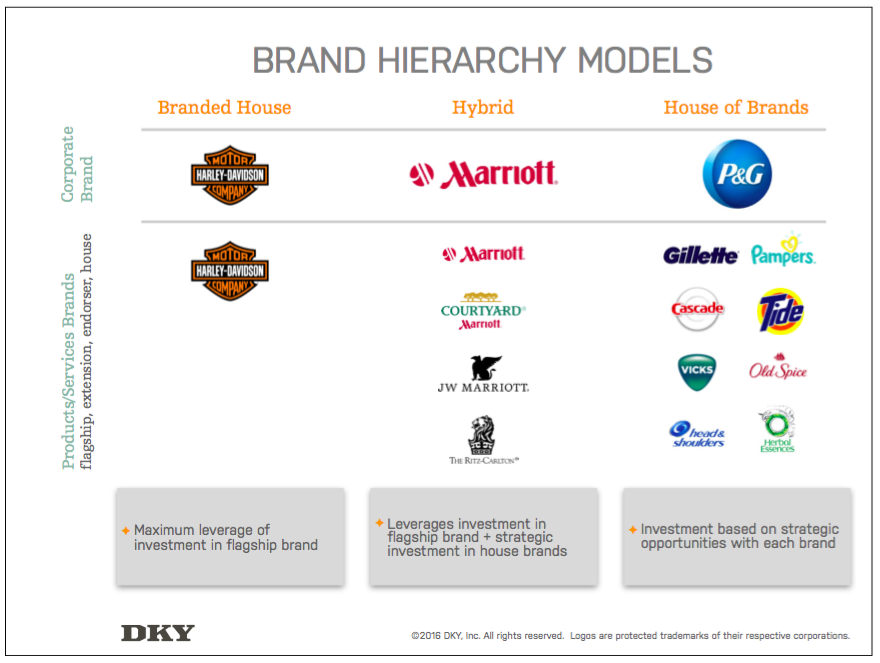
There are two key models to consider: a Branded House and a House of Brands. While they may sound similar, each model offers distinct benefits to a growing company. Branded House. In a Branded House model, the parent or holding company remains the parent brand and all of the smaller sub-brands operate under its umbrella.
Branding strategy how to define the right brand architecture? Enigma
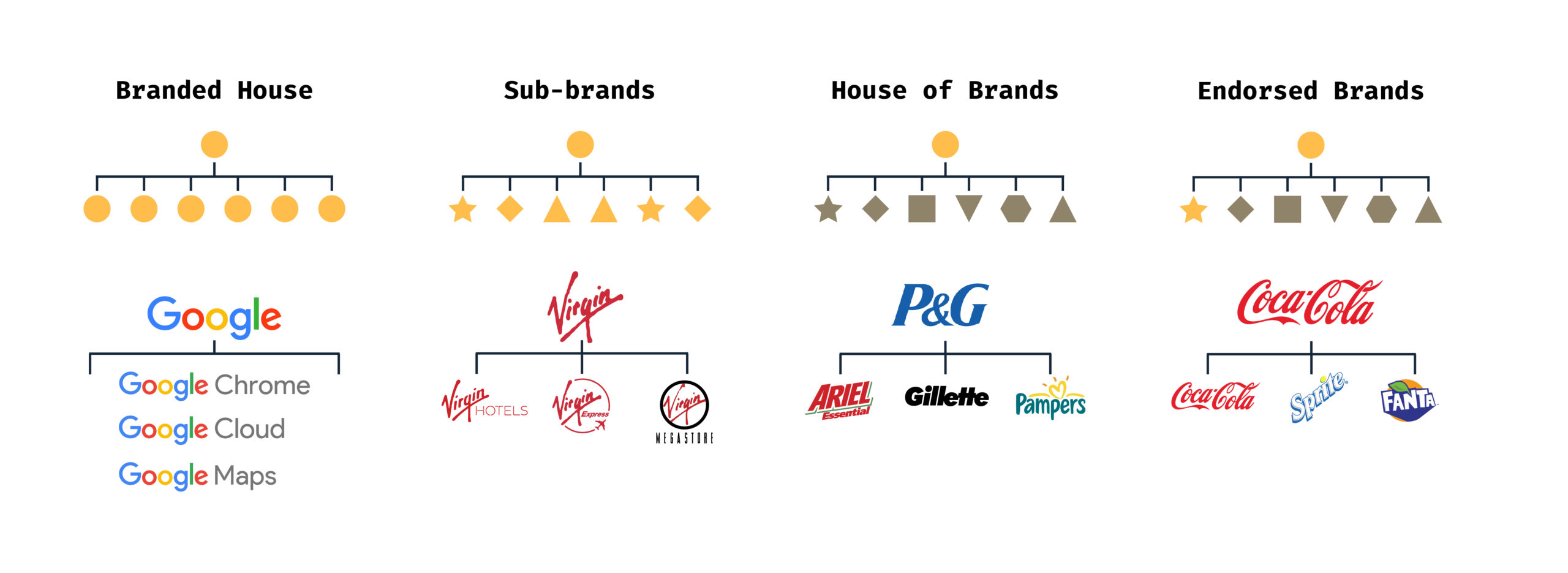
Branded House Definition. On the other hand, a branded house is more like a single-child family. In this case, the parent company is the main brand, and all its products endorsed brands or services carry its name. This approach allows the brand equity of the parent brand to extend to all the sub-brands or new products.
MultiBrand Strategies Branded House vs. House of Brands
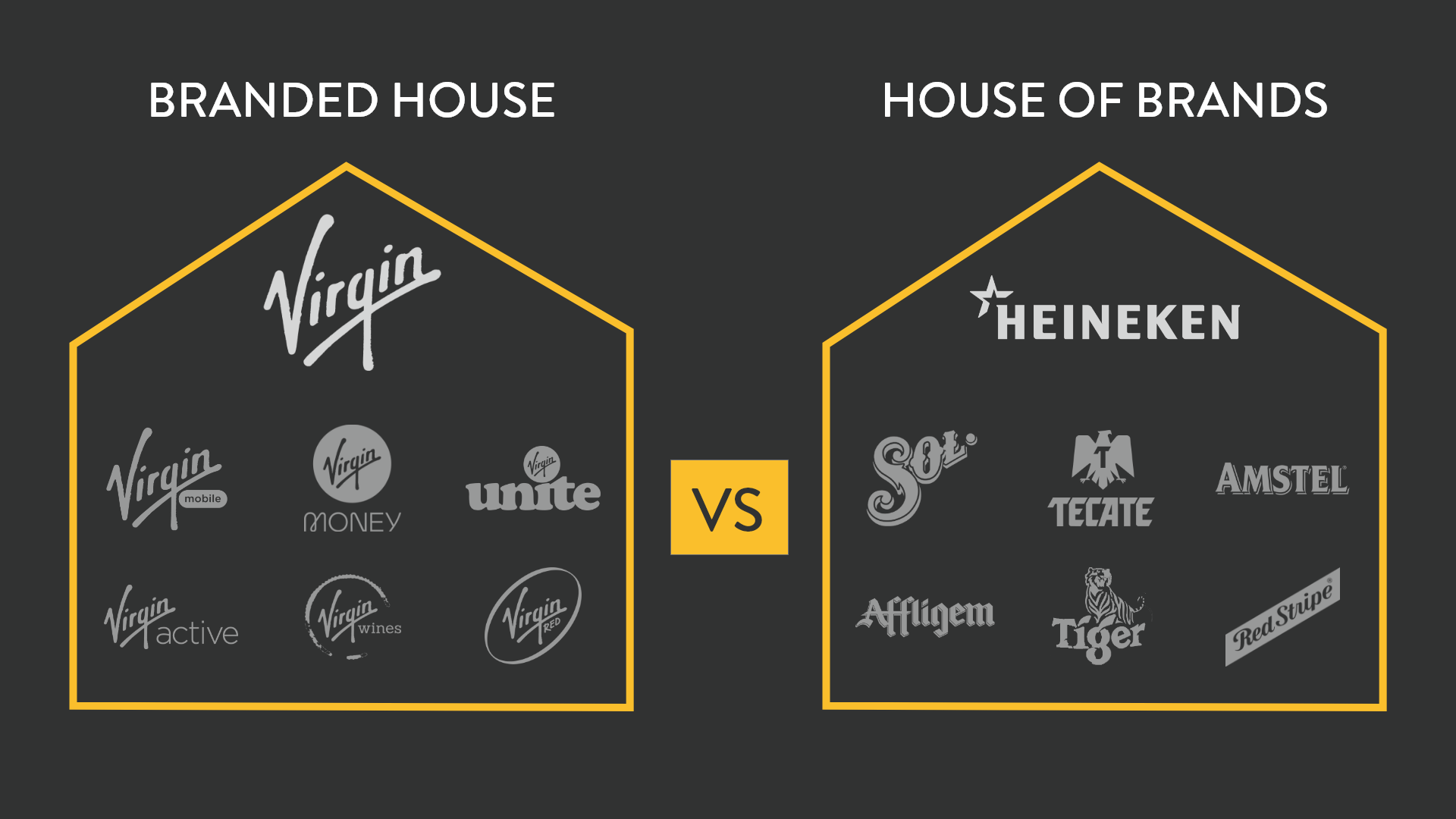
A House of Brands is the exact opposite of a Branded House. Whereas a Branded House maintains the focus on a single, well-known and consistent brand, a House of Brands is home to numerous brands, each independent of one another, and each with its own audience, marketing, look and feel. P&G and Unilever are great examples of a House of Brands.
What Is Brand Architecture [+ Examples] Brand Master Academy
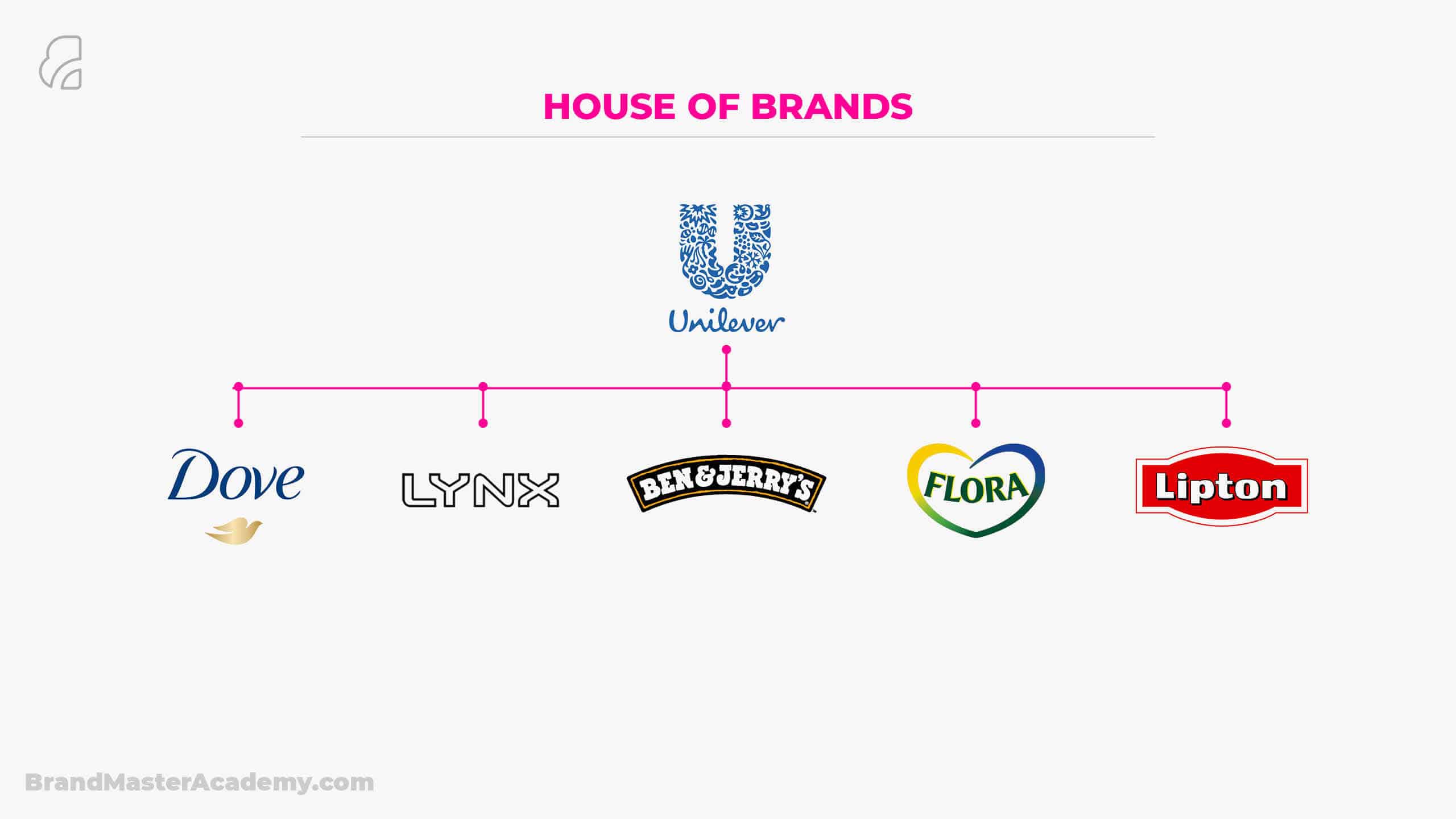
House of Brands: House of Brands is a branding strategy where a company markets and sells multiple individual brands that operate independently of each other, each with their own unique brand identity. Branded House: Branded House is a branding strategy where a company uses a single brand identity to promote all its products or services. Now.