What is a No Ball in Cricket? All 16 Types of No Ball
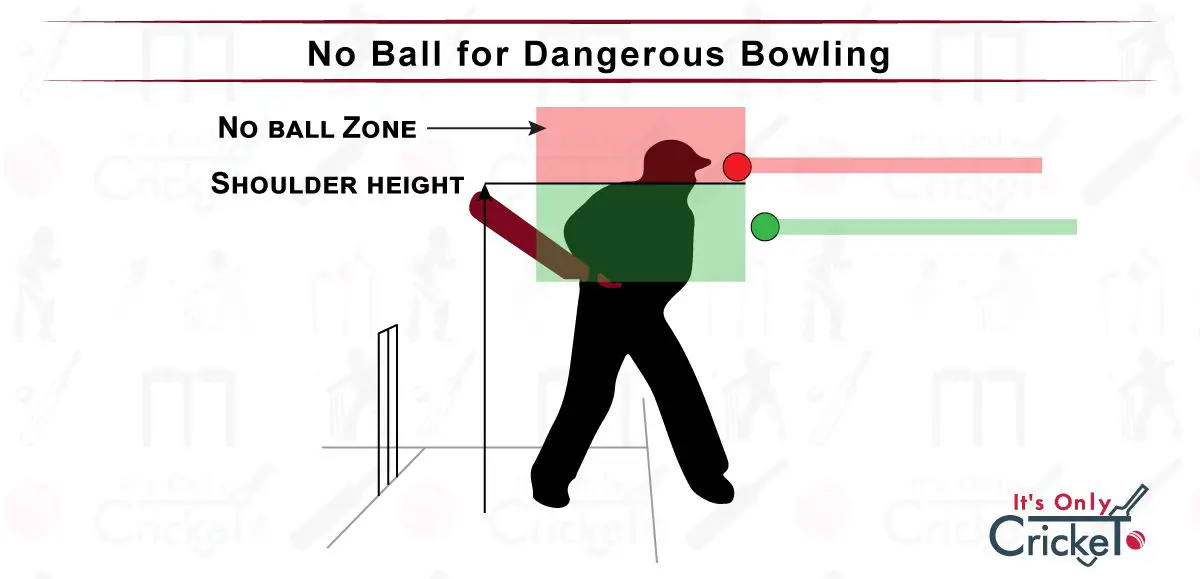
A No Ball in cricket is an illegal delivery bowled by the bowler. On a No Ball, the batting team gets an extra run, the batsman can only be out in limited ways and bowler has to deliver the ball again. No Ball can also be called for an act deemed by the umpire to be unfair and/or dangerous for the batsman. However, it isn't always that simple.
How to Know No Ball in Cricket Match?

If the ball is collected by the keeper in front of the stumps then it will be called as a no ball. No Ball: Back Foot. One of the simplest rules out there, the back foot should not break the return crease on the back foot. It is rare to see any violation of these rules. No Ball: Ball Stops Before Striker's Wicket.
Umpiring Blunders in Cricket Match A Legal Analysis Dhaka Law Review
The no-ball rules (Image credit: BBC) The chief utilisation of the return crease is to determine whether the bowler has landed his backfoot or some part of it outside or on the crease. A no-ball.
Is Front No Ball Rule The Reason Why Fast Bowlers Are Injuring Themselves More? On Cricketnmore
A "throw" ball is a no-ball. If at the point of delivery the bowler bends his elbow by more than 15 degrees, the delivery is considered a no-ball. If the bowler breaks the stumps at the runner's end during his delivery stride, the umpire will call a no-ball. If a ball delivered by a bowler bounces more than once on its way to the batsman.
Cricket Rules Explained When Is A Waist High Full Toss A No Ball? YouTube

No ball rules in cricket. A No ball in cricket is an illegitimate delivery bowled by the bowler resulting in an extra run awarded to the batting team as well as a free hit in the limited-over formats. The No ball delivery is not counted towards the bowlers' six legal deliveries to complete an over. In One-Day and T20 cricket, a No ball is.
Ashes 2019, Australia vs England at Edgbaston, back foot noball rule explained Fox Sports

A bowling team may be deemed to have bowled a no ball in a number of ways aside from the bowler stepping over the popping crease. Let's examine each category of no ball in cricket. 1. Front Foot No Ball - Bowler Overstepping. The most typical kind of no ball that occurs during a cricket match is a front foot no ball.
Cricket NO BALL a must know 24 types for knowledge. CRICJP

NO BALL - If Bowler Not Informing Mode of Delivery, Bowling Right or Left Handed. This Video shows 24 Scenarios when an Umpire can call a No Ball in Cricket1. NO BALL - If Bowler Not Informing.
November 2016 Know about Latest games reviews
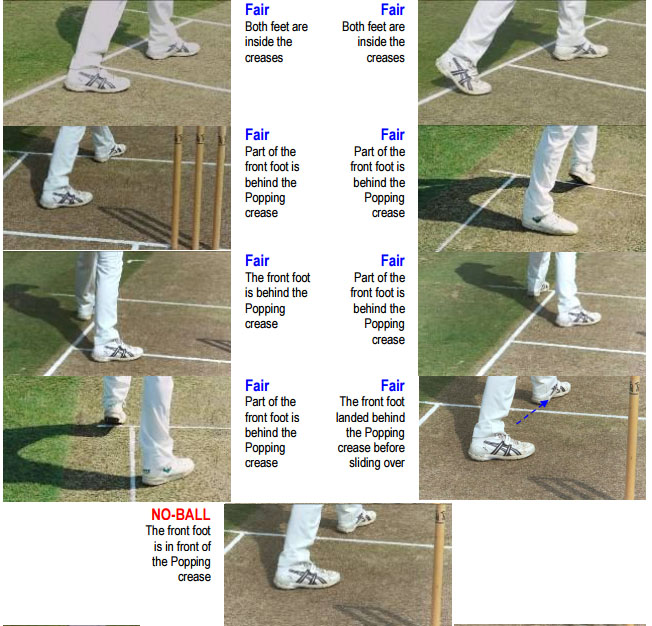
1. Front Foot No Ball - Overstepping by the Bowler. A front foot no ball is the most common type of a no ball that you will see taking place in a game of cricket. This usually happens when a bowler by mistake steps over the bowling crease while delivering the ball. A bowler overstepping while delivering the ball.
"No Ball Cricket Rules" Art Print for Sale by premnraj Redbubble
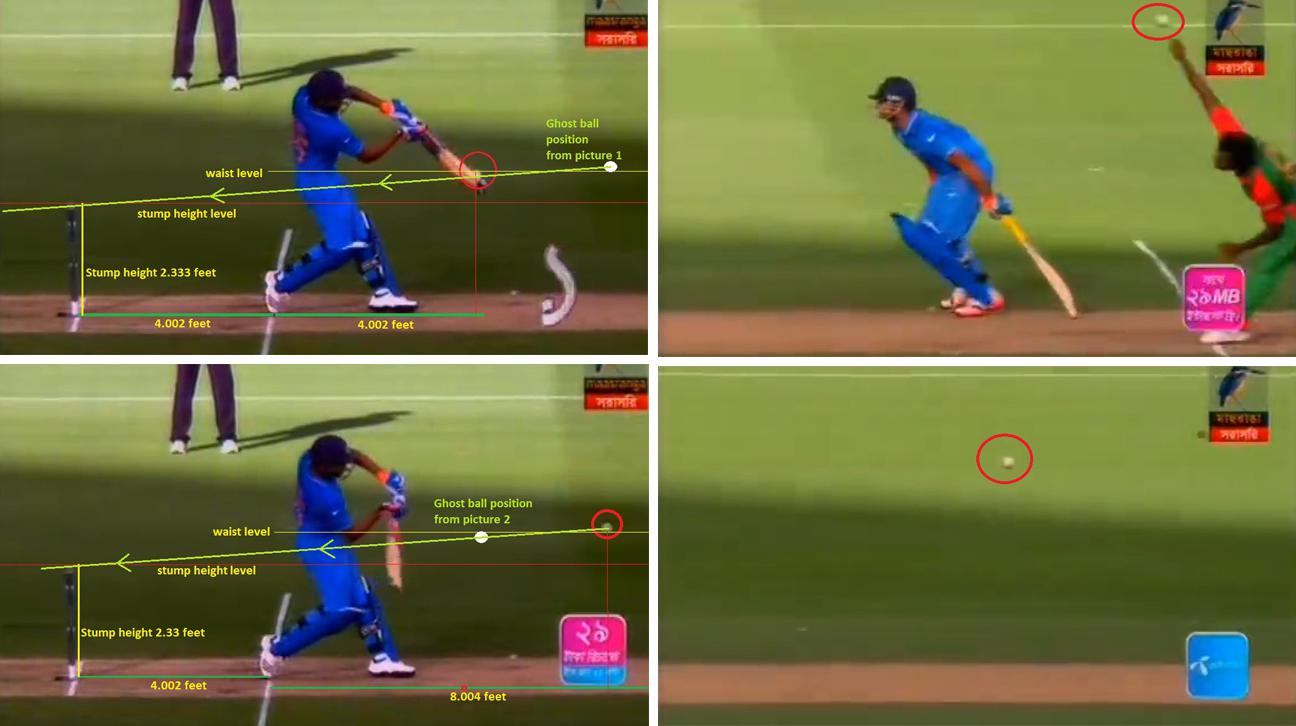
One of the hardersst cricket rules to get right for the umpires is a no ball for a waist high full toss. But what do the laws of cricket have to say? As alwa.
no ball rules in cricket jaiswal no ball ipl noball YouTube

Clause 21.19.2 of the playing conditions is clear: "For any free hit, the striker can be dismissed only under the circumstances that apply for a no ball". In other words, the only way a batter can.
No ball wasn't deliberate Pollard

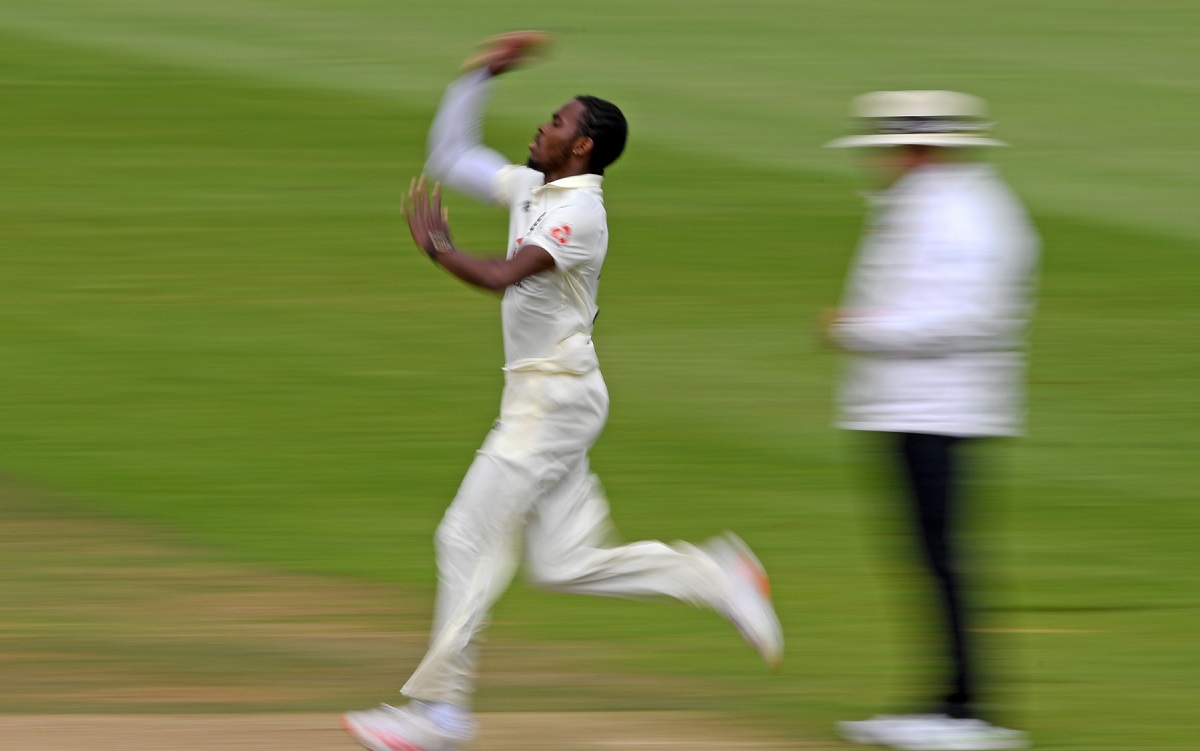
Throwing the ball in a way not allowed is called chucking. If the bowler does this more than once in the same innings, he/she can be removed from the attack. Rules allow the bowler to bend up to 15 degrees in the elbow joint while delivering the ball. Anything more than that, and the delivery will be deemed no-ball.
No Ball Rule 16 Types of No balls in Cricket International Cricket ICC Cricket

In addition to the instances above, No ball is to be called and signalled as required by the following Laws. Law 27.3 - Position of wicket-keeper. Law 28.4 - Limitation of on side fielders. Law 28.5 - Fielders not to encroach on pitch. Law 41.6 - Bowling of dangerous and unfair short pitched deliveries.
Types of No balls in cricket Know them all

Impact: This type of no ball in cricket is determined by the position of the bowler's front foot, which should not cross or land on the crease line. 2. Height No Ball: A height no ball in cricket is called when the ball crosses the waist height of the batsman without touching their bat or body. Impact: This rule ensures the safety of the.
Cricket NO BALL a must know 24 types for knowledge. CRICJP

9. Revoking a call of No ball. An umpire shall revoke his call of No ball if the ball does not leave the bowler's hand for any reason. 10. No ball to over-ride Wide. A call of No ball shall over-ride the call of Wide ball at any time. See Laws 25.1(Judging a Wide) and 25.3 (Call and signal of Wide ball). 11. Ball not dead
Cricket NO BALL a must know 24 types for knowledge. CRICJP

No-ball. In cricket, a no-ball is a type of illegal delivery to a batter (the other type being a wide ). It is also a type of extra, being the run awarded to the batting team as a consequence of the illegal delivery. For most cricket games, especially amateur, the definition of all forms of no-ball is from the MCC Laws of Cricket.
AutoNo ball system in Cricket Third umpire to call front foot no ball YouTube

A "No ball" in cricket is when the bowler breaks the rules set by the International Cricket Council (ICC) and the official rulebook. It leads to penalties for the bowling team.. Besides, there are some reasons for a no-ball including the bowler overstepping the popping crease (the front line marking the boundary of the bowler's delivery stride), the ball being bowled above the batsman.